
If you are exploring renewable heating solutions, you may be asking what is a biomass boiler and whether it is right for your property. Biomass boilers are becoming increasingly popular across the UK as businesses and homeowners look for more sustainable ways to heat buildings and produce hot water.
In this guide, we explain everything you need to know about biomass boilers, how they work, and whether they are worth the investment.
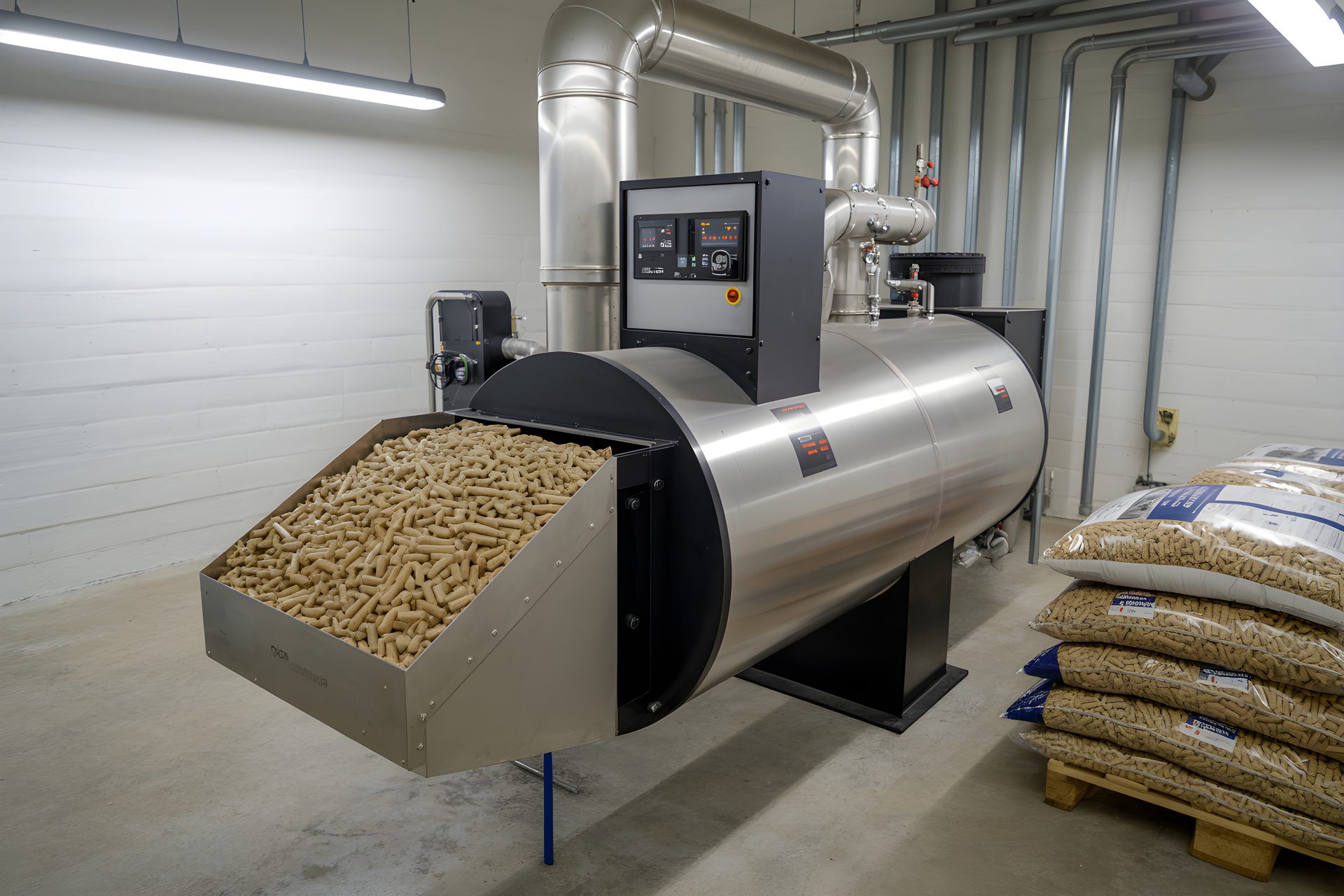
What Is a Biomass Boiler
A biomass boiler is a heating system that uses organic materials such as wood pellets, logs, or wood chips to generate heat. Instead of relying on fossil fuels like gas or oil, biomass boilers burn renewable fuel to provide heating and hot water.
Biomass boilers perform the same function as traditional boilers. They heat water which is then circulated through radiators, underfloor heating systems, or used for hot water throughout a building.
In the UK, biomass boilers are commonly used in homes, commercial buildings, and large scale systems such as farms and industrial facilities. Get in touch to see if a biomass boiler suits your building.
How Does a Biomass Boiler Work
Understanding how a biomass boiler works is key to deciding if it is right for your property.
Step by Step Process:
Fuel Supply
- Biomass fuel such as wood pellets or chips is stored in a hopper or fuel store. The boiler feeds this fuel into the combustion chamber either automatically or manually.
Combustion
- The fuel is ignited inside the boiler, producing heat through controlled combustion.
Heat Transfer
- The heat generated passes through a heat exchanger, which transfers the heat to water within the system.
Heat Distribution
- The heated water is then circulated around the property to radiators, underfloor heating, or stored in a cylinder for hot water use.
Waste Removal
- Ash is collected in a container and flue gases are safely expelled through a flue system.
Biomass Boilers for Hot Water and Heating
One of the main advantages of biomass boilers for hot water is their ability to provide both heating and domestic hot water from a single system.
They can:
- Heat radiators and underfloor systems
- Provide hot water for taps and showers
- Support large demand in commercial environments
Because of this, biomass systems are often used in properties with high heating requirements. Speak to our engineers qualified in commercial systems to find out more.
Types of Biomass Boilers
There are several types of biomass boilers UK customers can choose from depending on their needs.
Wood Pellet Boilers: These are the most common and offer automated feeding for convenience and efficiency.
Advantages
- Highly automated operation with minimal manual input
- Consistent fuel quality which improves efficiency
- Suitable for both homes and commercial properties
- Compact storage compared to other fuel types
- Reliable performance for heating and biomass boilers for hot water
Disadvantages
- Higher upfront installation cost
- Requires electricity to operate automated systems
- Fuel must be purchased rather than sourced freely
- Storage space still required for pellets
Wood Chip Boilers: Often used in commercial or agricultural settings where fuel is readily available.
Advantages
- Lower fuel costs when sourced locally
- Ideal for large scale heating systems
- Suitable for continuous use in commercial environments
- Can use locally sourced or waste wood materials
Disadvantages
- Requires large storage space for fuel
- More complex fuel handling systems
- Less consistent fuel quality compared to pellets
- Higher maintenance requirements
Log Boilers: Typically require manual loading and are more suited to smaller or rural properties.
Advantages
- Lower fuel costs if logs are sourced locally
- Simple system design
- No need for automated feeding systems
- Suitable for smaller properties
Disadvantages
- Manual loading required
- Less convenient than automated systems
- Requires regular attention and fuel handling
- Lower efficiency compared to pellet systems
- Not ideal for commercial or continuous use
Industrial Biomass Boiler Systems: An industrial biomass boiler is designed for large scale operations such as factories, schools, and commercial sites.
Advantages
- High output suitable for large buildings
- Can significantly reduce long term energy costs
- Supports renewable energy goals for businesses
- Efficient solution for large heating and hot water demand
Disadvantages
- High initial investment
- Requires significant space for plant and fuel storage
- Ongoing maintenance and management required
- Professional operation and monitoring needed
Benefits of Biomass Boilers
Renewable Energy Source
- Biomass boilers use organic materials, making them a more sustainable alternative to fossil fuels.
Lower Carbon Emissions
- They are often considered carbon neutral because the carbon released during burning is similar to that absorbed during the plant’s growth cycle.
Cost Savings Over Time
- Fuel can be more affordable than traditional energy sources, especially in off grid areas.
Versatile Heating Solution
- Suitable for domestic, commercial, and industrial applications.
Are Biomass Boilers Worth It in the UK?
For many properties, especially those off the gas grid, biomass boilers UK can be a practical and cost effective solution.
They are particularly suitable for:
- Rural properties
- Large homes or buildings
- Businesses with high heat demand
- Sites with access to low cost biomass fuel
However, they do require space for fuel storage and regular maintenance, which should be considered before installation.
About ROMA Heating Services
At ROMA Heating Services, we’ve helped hundreds of businesses across the region find cost-effective heating solutions that actually work. We understand that every commercial building is different, which is why we take time to properly assess your needs before recommending a system.
Our team has extensive experience with gas boilers, warm air heating, modern electric systems, and hybrid solutions. We’ll give you honest advice about what will genuinely save you money rather than just selling you the most expensive option. Whether you need a complete new installation or want to improve your existing system’s efficiency, we’re here to help you cut costs without compromising comfort.